


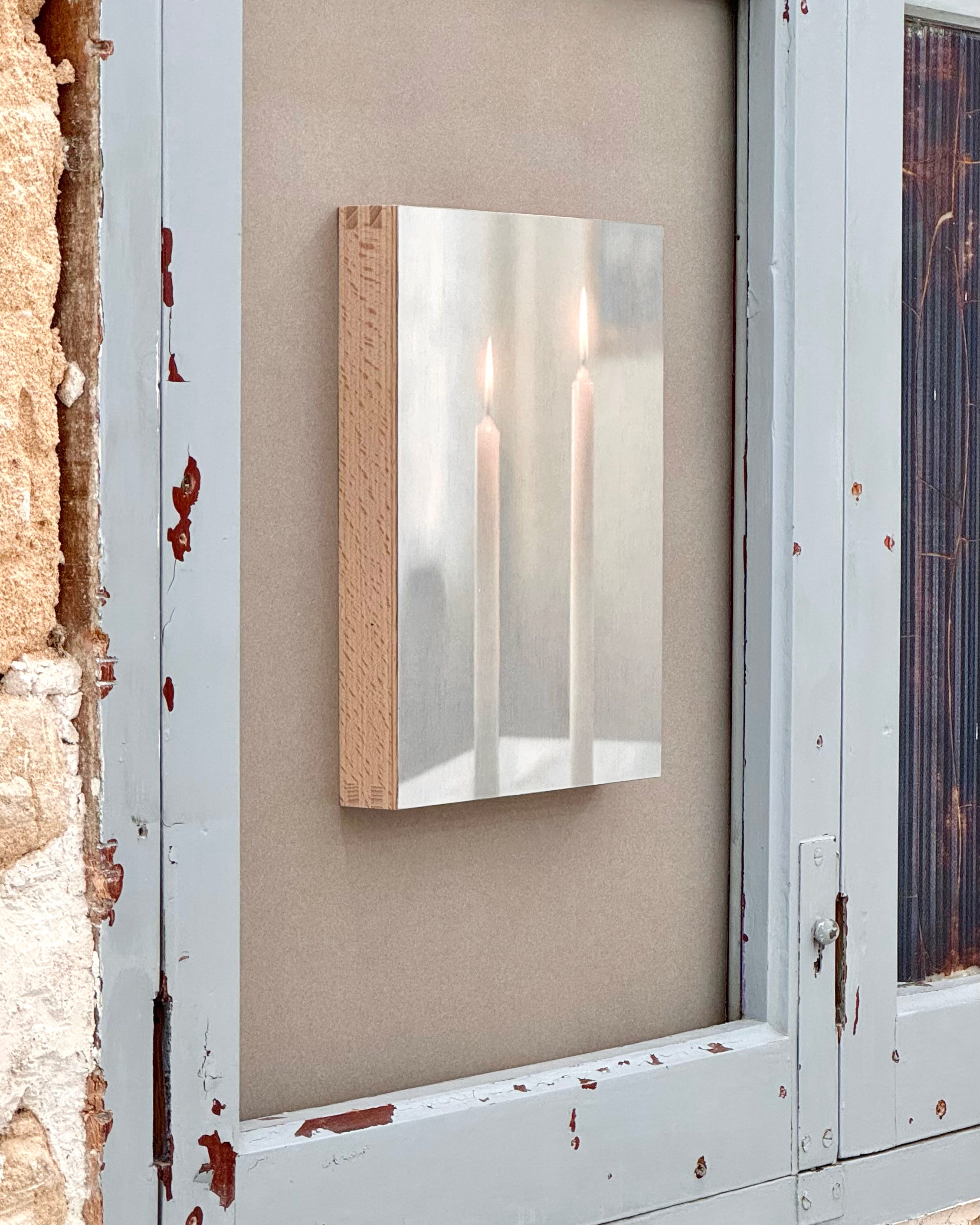
#007/067
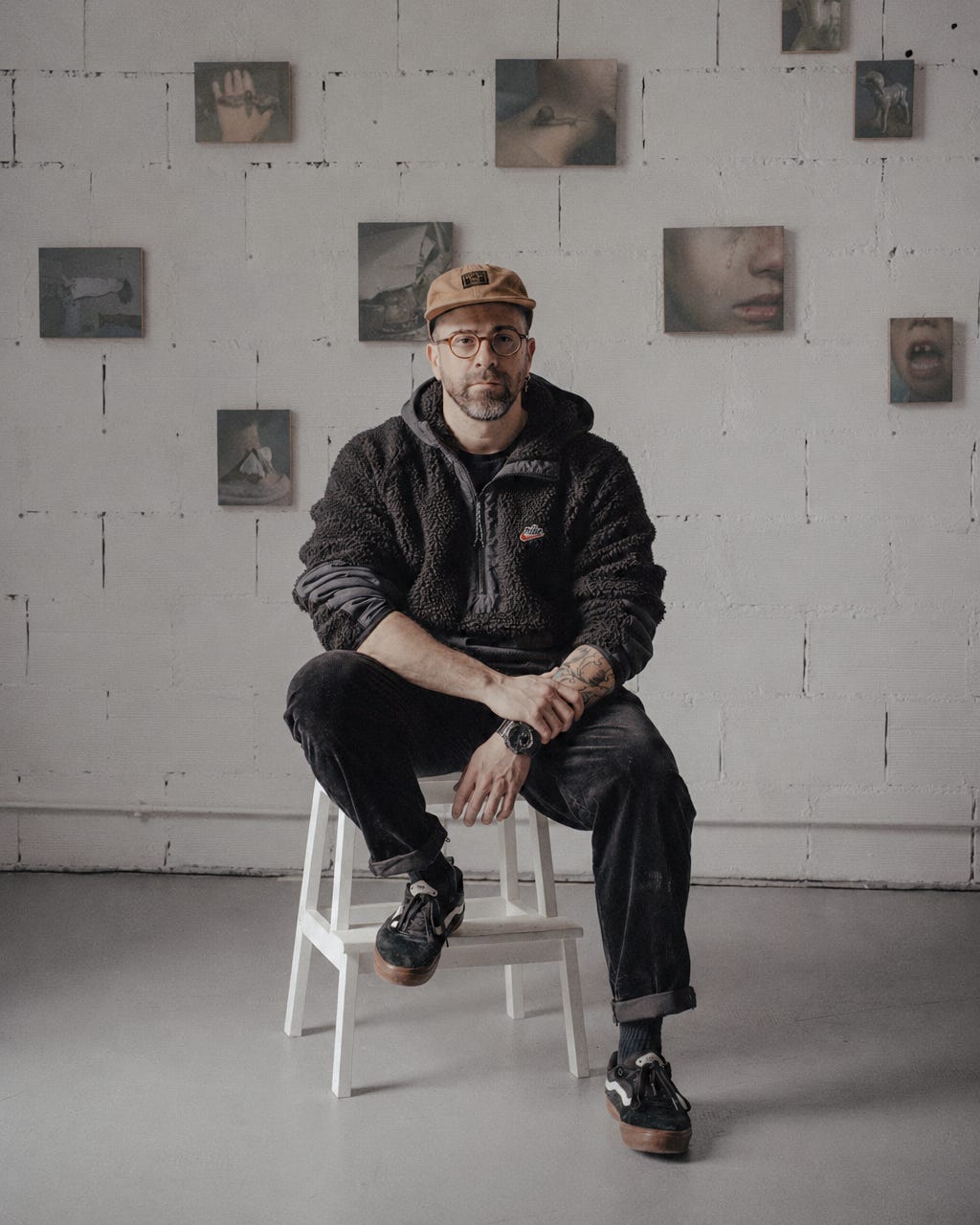
We step into the world of Alejandro Javaloyas, where memory blurs and images linger at the edge of disappearance, and dreams fade even as they form; through a careful process of writing, drawing, and making, he creates restrained yet emotionally resonant works in which meaning is not stated but quietly suggested, inviting the viewer to complete what remains unsaid.
www.alejandrojavaloyas.com
@alejandro_javaloyas
Let’s go!
Why does fear appear so often in your titles?
Un cuchillo que no corta is essentially an atlas of my own nightmares — years of notes kept in a notebook by the bed, fragments of dreams that dissolve the moment I wake. Working from those fragments, I’ve built a personal mythology that touches on things far bigger than me: time, death, spirituality, and mostly fear — the fear of not being able to give form to what I can’t fully understand.
The project moves in a circle between image and language. A nightmare appears as an intense mental image, then fades into something small once I write it down. AI text-to-image models turn that note back into an image, one that half-remembers and half-misreads the original vision. From hundreds of results, I keep only a few, then crop and edit them until they become stable references for the drawings.
So when the pieces are full of burning houses, crashed cars, drowning people, the Boogeyman, etc., the titles work as keys — a verse, a line from a film, a phrase from literature — opening onto the same fear the image already carries.
How do you decide when a work has found its final form?
With this body of work, colored-pencil drawings built from photographic references, the final step is actually the easiest to recognise. Colored pencil doesn’t allow the endless layering oil paint does — once the paper is saturated with pigment and wax, the drawing is finished; there’s no more room to negotiate. Rendering the reference faithfully is a fairly obvious goal, so that part resolves itself naturally.
The real difficulty happens earlier, in curating the AI-generated images. Out of hundreds of outputs, I need to find the one that walks the line between beauty and unease — an atmosphere thick enough, creepy but still pretty, strong enough to justify hours of drawing. Cropping and editing it digitally is where all the intuition lives; by the time I sit down to draw, the hardest decisions are already behind me.
What question about your work do you wish people asked more often?
Honestly, I’ve never thought about that. This body of work is made mostly for myself — studio time and solitude feel less like a preference and more like a need. Going back into old traumas and translating them into images has an obvious therapeutic function: a way of coping, of accepting, of making some kind of peace with things I couldn’t process any other way.
Once a piece is finished, though, I feel a strong detachment from it, as if it belongs to the world now and it’s up to the piece, and whoever’s looking at it, to decide what happens next. I don’t feel exposed at openings, I don’t get nervous, and if someone doesn’t connect with the work, that’s fine. The real vulnerability happens earlier: I never record myself working, and I could never draw with anyone in the room, because that’s the moment I’m actually exposed.
So I don’t wish people asked me anything specific. I’d rather the work simply reach into their own lives and find something relevant there.
Is there a color you find yourself trusting more than others?
No, not really. I don’t have a color I trust more than others in any conscious sense. If anything, what I trust is a tendency: muted tones, low contrast, low saturation, a kind of fogginess or blur that runs through almost everything I make. It’s completely intuitive, not a rule I set for myself.
I think it comes from the same instinct that shapes the rest of the work — I don’t want color to resolve things too clearly. A washed-out, greyish register keeps the image closer to memory than to description, closer to something half-seen than something stated. Even when color is present, it behaves more like atmosphere than information.
How do your dreams or nightmares enter the work, if at all?
It starts with a notebook by the bed. I’ve had intense, recurring nightmares since childhood, and the only way to hold on to any of it is to write down whatever survives the first minutes after waking — an object, a color, a gesture, a feeling. The dream itself is gone almost immediately.
From that note, I generate images using AI text-to-image models, which work almost like an external unconscious: they never reconstruct the nightmare accurately, they misread it, the way memory does. I produce hundreds of images and keep only a handful, the ones that carry the same emotional weight as the original note, even if they look nothing like what I actually dreamed.
Those survivors get cropped and digitally edited until they become atmospheric references, then translated into colored-pencil drawings. By the time a piece is finished, I’ve usually forgotten the nightmare that started it — nightmare into note, note into image, image into drawing, each step adding and losing something.
What has surprised you most in how people interpret your work?
Two things, in opposite directions. The first is how personal the recognition can be. These images come from an extremely private source, my own nightmares, things I’d rarely say out loud. I expected the work to stay locked inside that specificity. Instead, people often tell me a piece unsettled them in a way they recognize from their own childhood or half-remembered fears, even when the imagery has nothing literally to do with their life.
The second is closer to disappointment. Some people hear that AI is part of my process and reject the work immediately, without looking at how it’s used, as one step in a longer chain of translation and manual labor. I understand the hesitation, but I didn’t expect that reflex to move so fast, in a field that has absorbed photography and other suspect tools before it. Once a piece leaves the studio, I’ve already accepted both reactions are equally out of my hands.
Thank you readers! Stay tuned for more!
Zella